
Airfield Grounds Maintenance
Grass management, tree and vegetation clearance and landside landscaping for airports and airfields, planned around live operations.
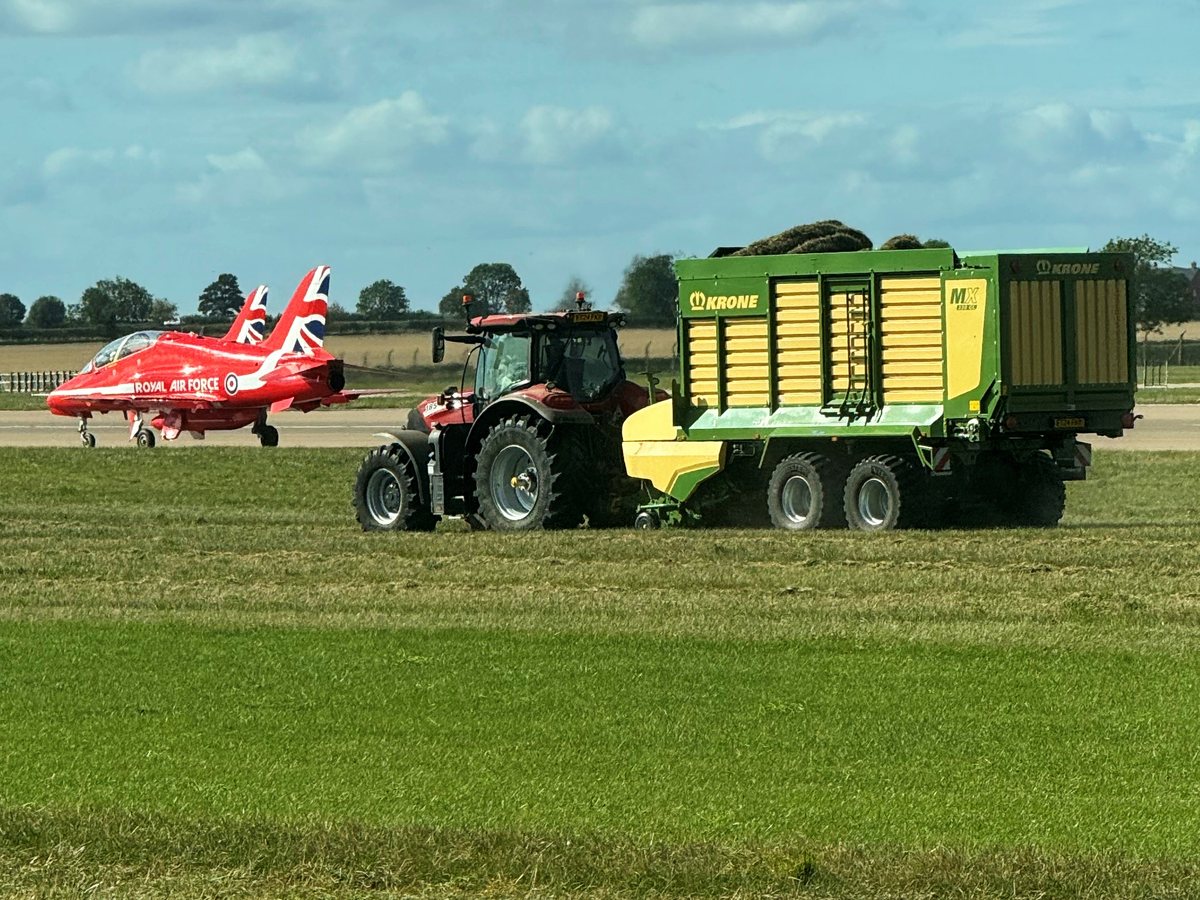
Grass is a safety system
On an airfield, grass height matters. It decides which birds feed and roost near the runway, how the ground drains, and how it behaves if an aircraft leaves the paved surface. We work to the airfield's long grass policy and Wildlife Hazard Management Plan, in line with the CAA's guidance in CAP 772, not to a park schedule.
Grass management
- Long grass policy: sward kept dense and within the height band the airfield sets, so it gives birds no cover to feed, nest or flock in
- Topping: runway strips, taxiway margins and open grassland, cut with tractor-mounted toppers and wide-area mowers
- Cut and collect: arisings lifted with forage wagons and taken off the airfield, so nothing is left to blow onto paved areas or attract wildlife
- Bottoming out: a low reset cut to bring overgrown or matted areas back under the long grass policy
- Strimming and back-cuts: around ground lighting, signs, markers, aids and fence lines, so they stay visible
- High blast areas: maintaining grass behind runway ends and holding points, where jet blast strips weak turf
Turf and surface care
- Rolling and aeration: firming and relieving compaction so the surface drains and carries vehicles
- Overseeding and reinstatement: repairing scars from works, vehicles and blast damage
- Fertiliser and lime: keeping the sward dense where the policy calls for it
- Selective herbicide: controlling broadleaf weeds that attract insects and birds
- Crack and joint weed control: on aprons, taxiways and paved margins
Airfield safeguarding tree work
- Obstacle clearance: trees and scrub that infringe the airfield's obstacle limitation surfaces
- Approach lighting and navigation aids: keeping lights and equipment sightlines clear
- Perimeter fence lines: clearing growth that hides or damages security fencing
- Habitat control: removing scrub and cover that draws wildlife onto the airfield
- Arisings: chipped and removed, with nothing left behind that could become debris
Our tree teams are NPTC-qualified and use the same machinery as our site clearance and utilities work.
Landside landscaping
- Terminal approaches and roundabouts: the first impression for passengers
- Car parks and staff areas: grass, shrub beds, hedges and weed control
- Planting and beds: new planting and seasonal upkeep
- Litter and bins: as part of a planned grounds maintenance schedule
Working on a live airfield
- Planned with operations: permits to work, agreed areas and time windows, and work stopped or moved at short notice for aircraft movements
- Radio and ATC: operatives in contact with air traffic control or the airfield's operations team throughout
- Zero FOD: vehicles, attachments and work areas checked before and after every shift, and nothing left on or near paved surfaces
Need an airfield contractor?
Tell us about the site, the work and your operating constraints.