
Land Drains and Attenuation Systems
Waterlogged open space, soggy gardens and surface water that won't go away, fixed with land drains, soakaways and attenuation systems installed by our own landscape teams.
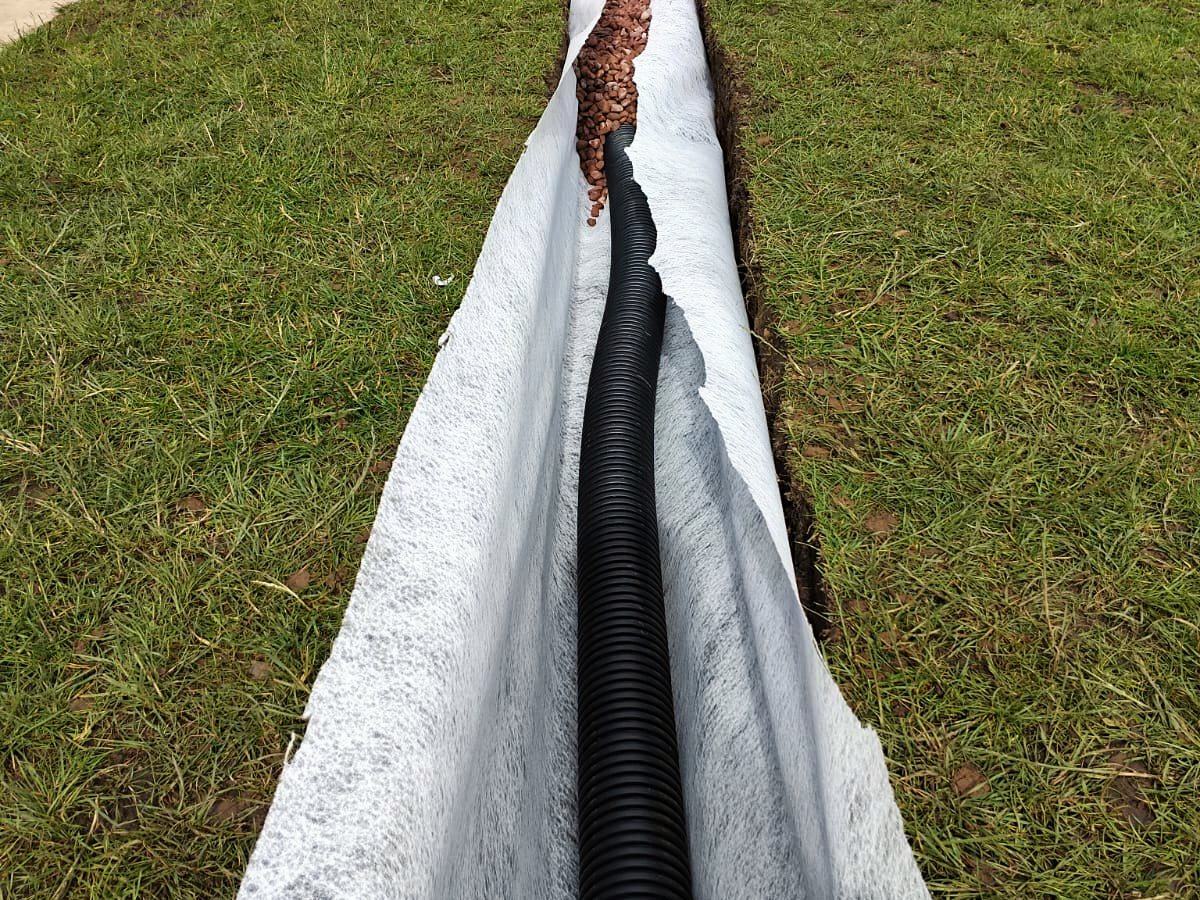
Ground that drains
On new developments, compacted subsoil and heavy clay often leave public open space, gardens and verges waterlogged for months, and that leads to complaints, failed planting and delays to adoption. On existing sites, poor drainage turns grass to mud and floods paths and car parks. We install drainage that moves water away and holds it where it should be, for developers, housing associations and commercial sites.
What we install
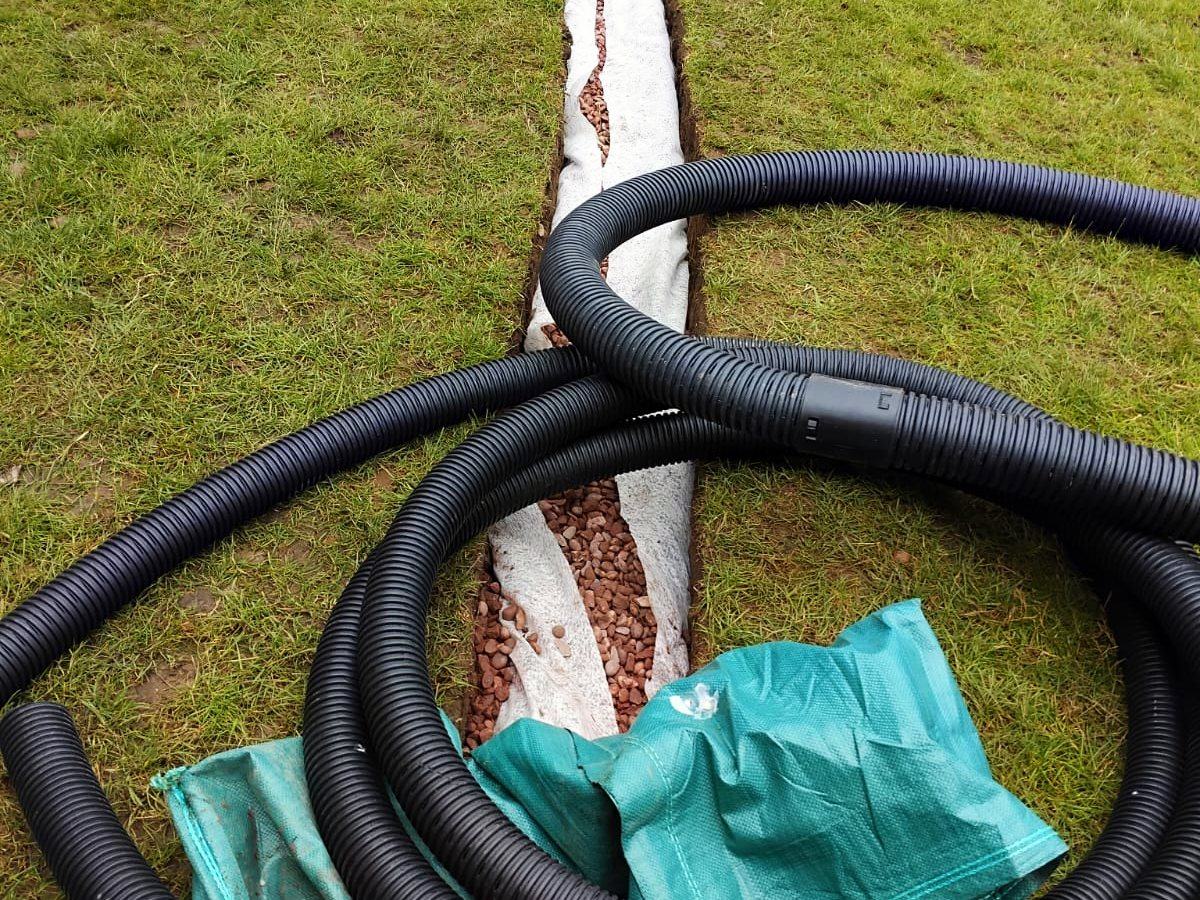
- Land drains: perforated pipe drains laid in gravel-filled trenches across lawns, open space and sports areas
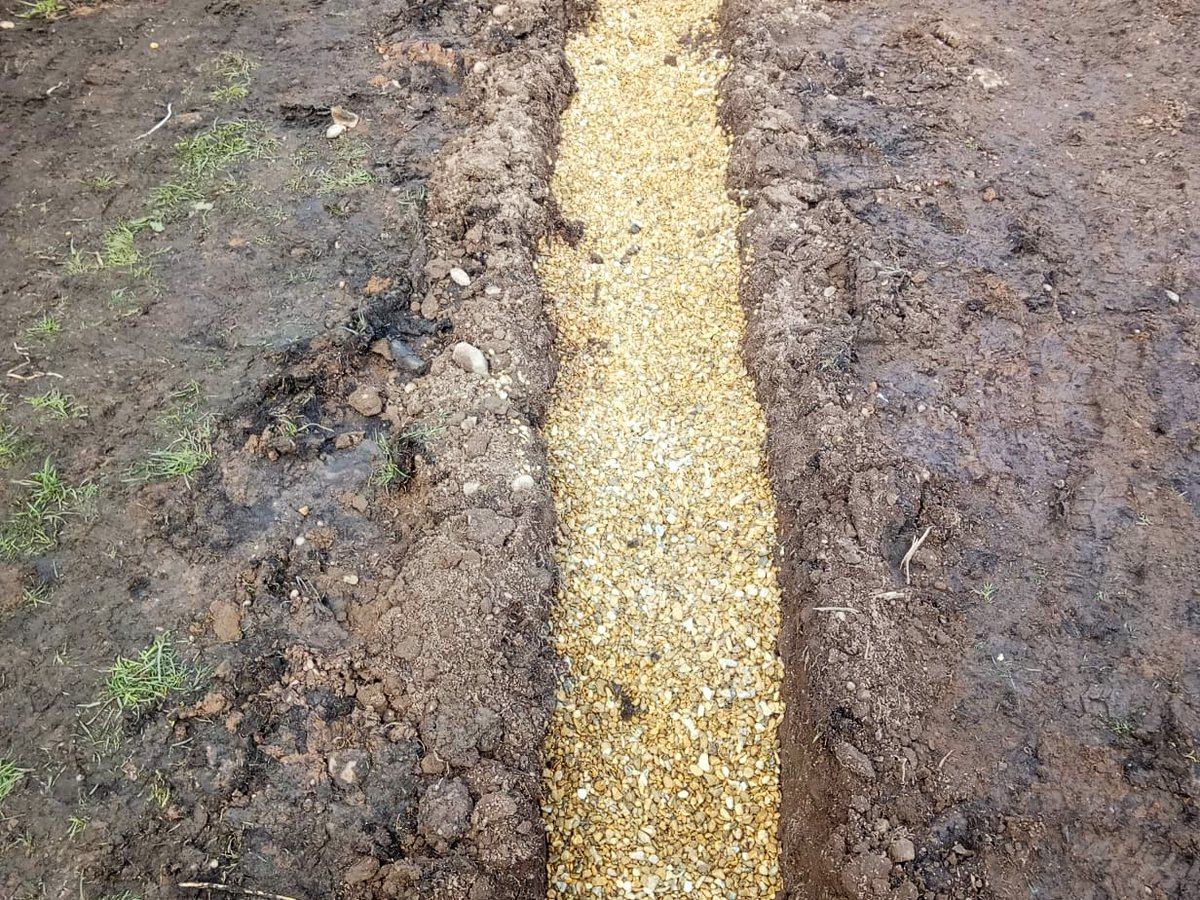
- French drains: gravel-filled trenches that catch surface water along paths, boundaries and the bottom of slopes
- Soakaways: for roof and surface water where the ground can take it
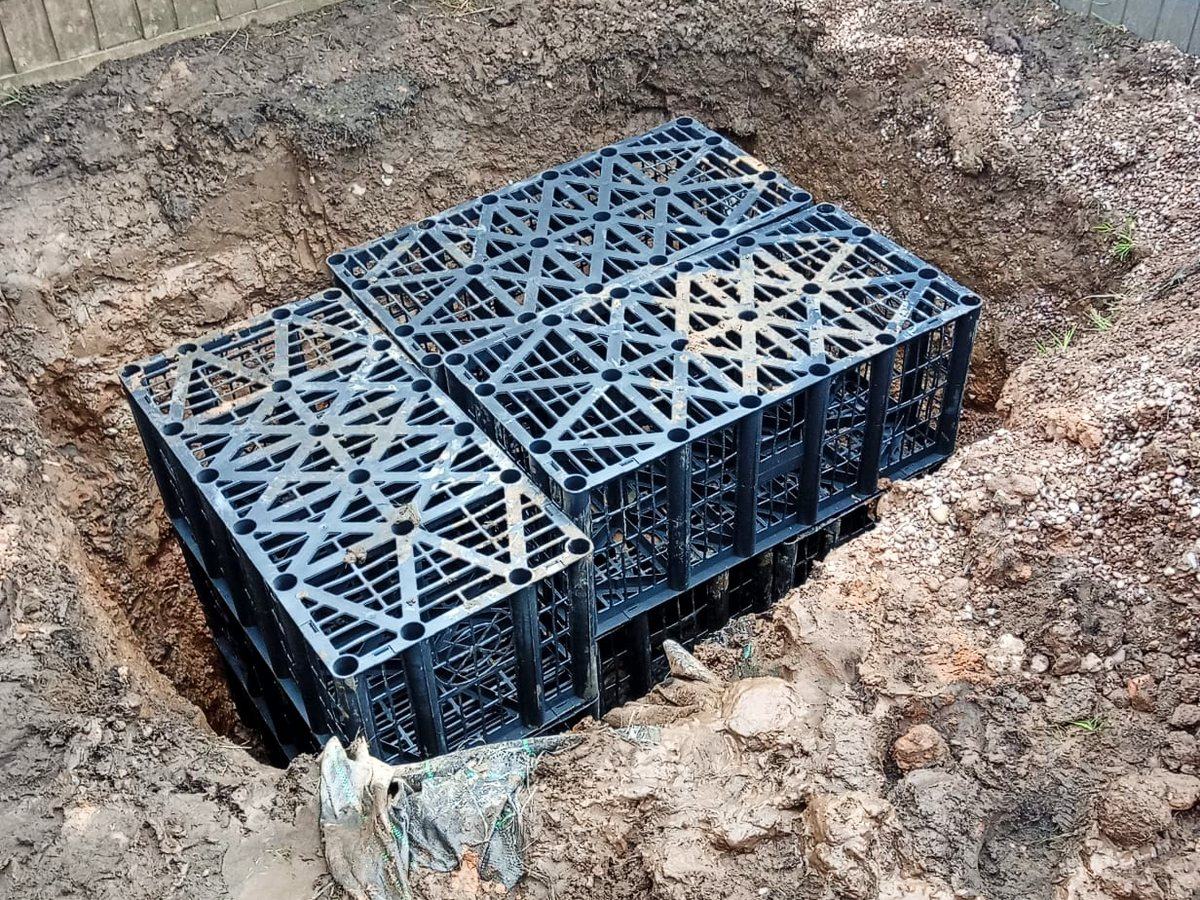
- Attenuation systems: underground storage crates or tanks that hold storm water and release it slowly at a controlled rate
- Connections and outfalls: catchpits, inspection chambers and connections to ditches, watercourses or existing drains
How we work
- Survey: we look at the site, the soil, the falls and where the water can go.
- Agree the scope: what's being installed, where it runs and when we'll be on site.
- Install: trenching, pipework, stone and storage installed, with turf and surfaces reinstated.
- Record: as-built photos and drain runs recorded for your files and for adoption.
On site
Drainage and landscaping together
Drainage is often the first step in fixing tired or waterlogged ground. We can follow it with impact aeration, soft landscaping and grounds maintenance, so the same team takes the site from wet ground to handover.
Frequently asked questions
Will drainage fix a waterlogged lawn on its own?
Often it's the biggest part of the fix. Where the soil is also compacted, combining land drains with impact aeration gives the best result.
What is the difference between a land drain and a French drain?
A land drain is a perforated pipe laid in a gravel-filled trench, which collects water from the soil and carries it away. A French drain is a gravel-filled trench, with or without a pipe, usually placed to catch surface water along a path, boundary or the bottom of a slope.
What is an attenuation system?
Underground crates or tanks that store storm water and let it out slowly, so the drains and watercourses downstream aren't overwhelmed in heavy rain.
Where does the water go?
To a soakaway where the ground can take it, or to a ditch, watercourse or existing drain. We check what's available on site before pricing.
How much disruption is there?
Trenches are narrow, and turf and surfaces are put back when the work is finished. Most lawns and open spaces can be used again within a few days.
When is the best time to install land drains?
Drier months are easiest, as the ground carries machinery better and trenches stay clean. We can work in winter too, with extra ground protection.
Can you install drainage in domestic gardens?
Yes. We work in new-build gardens for housebuilders as well as on open space and commercial sites.
One-off job or ongoing contract?
Tell us about the site and we'll arrange a visit and a quote.